

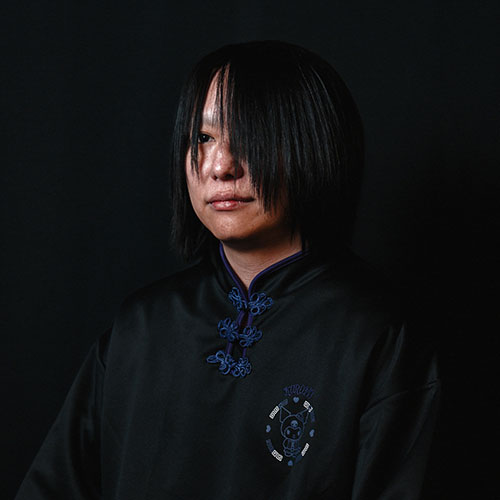
Game Designer
Kuniyoshi Omura
○ What Bokeh Game Studio Is Like
At Bokeh, anyone can freely share ideas regardless of their position, and there’s a real bottom-up culture where those ideas can actually be reflected in the project. That’s something I find incredibly rewarding.
It’s not a place where you just quietly complete assigned tasks. It really suits people with initiative — those who actively look for what they can do next and aren’t afraid to get involved in everything.
Being fully remote-friendly is also a huge plus, especially for those raising kids. You can “commute” one minute after waking up. Personally, I have a sensitive stomach, so being freed from the fear of sudden stomachaches during a commute has honestly been life-changing.
_
○ Favorite Games
- Tenchu: Stealth Assassins
- Phantom Crash
- SSX
_
○ A Game-Related Memory
When I was growing up, there was a strong belief that games were bad for children’s brains. At my house, I was only allowed to play for half the amount of time I spent studying. That was the absolute rule.
And I had to play in what we called “the North Room” — basically a storage room — with no heating allowed.
Since I didn’t get allowance, I woke up at 5 a.m. to deliver newspapers to earn money. I studied intensely before school, then studied more after coming home to earn more playtime. In freezing temperatures, with visible breath and numb hands, I warmed my fingers by rubbing them together while playing the games I loved.
Looking back, I sometimes think, “What a dedicated little game kid I was.”
In contrast, my own child started holding a controller at age zero. Now at two years old, since their fingers can’t quite reach the L/R buttons and the sticks at the same time, they’ve developed this impressive sliding technique to handle intense action games. It’s truly a different era — and a good one.
_
○ The Game I Played Most as a Kid
“Downtown Special: Kunio-kun no Jidaigeki Dayo Zenin Shūgō!” (FC)
You could cooperate, compete, explore, mess around — anything.
The freedom to decide how to play made it endlessly replayable with friends and siblings. I still play it with my wife and kids today.
_
○ The Game That Made Me Want to Join the Industry
“Tenchu: Stealth Assassins” (PS1)
It showed me that games can express anything if you have the right ideas. I felt the limitless potential of games as a total art form. It’s hard to put into words how powerful that experience was. That’s when I decided I didn’t just want to play games — I wanted to make them.
_
○ The Most Shocking Game I Played
“SWAT 3” (PC)
It was my first network multiplayer experience. Being able to communicate with players around the world through radio chat and cooperate or compete across language barriers was mind-blowing at the time. It’s normal now, but back then, it felt revolutionary.
_
○ The First Game That Truly Scared Me
“FATAL FRAME – Zero: Special Edition” (Xbox)
Ghosts didn’t just appear as enemies — they blended into the environment through subtle sounds and visuals. Even when nothing was happening, just walking around felt terrifying. The atmosphere alone created overwhelming immersion.
_
○ A Game That Means a Lot to Me
“LIVE A LIVE” (Super Famicom)
I wanted it so badly as a kid that I cut out magazine articles, pasted them into a notebook, and added my own explanations about why this game was so innovative and amazing. I presented it to my parents once a week for months.
Maybe they gave in to my relentless pitch — but I finally received it as a Christmas present. I was so happy I even slept with it next to me.
I grew up in a Buddhist household and was always told Christmas didn’t apply to us, so presents weren’t really a thing. That made it even more meaningful — it was the first and last Christmas gift I ever received from my parents.
_
○ Favorite Authors
- Kanoko Okamoto
- Junichi Watanabe (early works)
- Kotaro Tsunekawa